Here’s a bit of honesty for you: when someone says ‘game night,’ what they really mean is ‘let’s drag out Cards Against Humanity and pretend we’re all having a riot.’ Well, I’m done. I’ve played it, suffered through it, and faked enough laughs to last a lifetime. I’ve done my stretch. Paroled. Never going back.
Cards Against Humanity isn’t a game. It’s a factory-made brain drain, all dressed up in a black box, like a funeral for your intelligence.
The whole idea is a sad joke: slap something crude on a card and watch the sheep laugh. That’s not comedy, that’s just embarrassment with a price tag. It’s like a bunch of teenage boys finding their old man’s dirty magazines and thinking sniggering at naked women makes them interesting.
You don’t play Cards Against Humanity, you just endure it. No strategy, no spark, no cleverness, just a conveyor belt of cheap gags that hit the floor like a cold shepherd’s pie. It’s like being forced to watch someone else heat up leftovers, only you’re not allowed to leave. Whoever wins is just the one who’s best at being daft. Congratulations, you’re King of the Idiots.
The pace? Like watching a car crash in slow motion, only less exciting. In the first round, someone snorts when a card says something rude. Five minutes later, you realize you’ve signed up for a marathon of recycled filth and forced laughter. Everyone’s faking it because if anyone admits the truth, the whole night falls apart. This isn’t a party game; it’s a test of who can keep up the charade longest. It’s like Laurence Olivier torturing Dustin Hoffman in Marathon Man, but at least there was a cure for that pain.
And don’t get me started on the fake edginess. CAH likes to pretend it’s the wild child at the party, but it’s just lazy. It doesn’t push boundaries, it tiptoes around them like your uncle after too many pints, thinking he’s a rebel because he made a rude joke at Christmas dinner. If you want to be edgy, try being clever. If you want to be bold, try being original. If you want to be funny, actually put in some effort. CAH does none of that. It’s a beige wall with a few swear words stuck on for decoration.
But the real crime isn’t what’s on the cards; it’s the hours of your life you’ll never see again. Time you could have spent reading something decent, watching a film that doesn’t make you want to eat glass, talking to people you don’t secretly despise, or even just staring at the ceiling and questioning your life choices. All of these are a step up from CAH.
Honestly, I’d rather read Tolkien, get a tooth yanked, chat with strangers, alphabetize my sock drawer, ponder the heat death of the universe, sit through a presidential debate, watch Nicole Kidman escaping to an empty theater, or those two idiots flogging Coke at AMC, or try sword swallowing with no clue what I’m doing. All of these are more enriching experiences. I almost said watching Arsenal, but I haven’t reached the bottom of life’s barrel, but CAH is almost there.
It’s a crime against trees. Environmentalists? My arse. Every time you crack open that box and its endless expansions, you’re basically voting for deforestation. Well done, you’ve killed a forest for a cheap laugh. Hippy Card revoked.
So here’s the verdict, delivered with the full authority of someone who has endured far too many faux‑fun evenings:
Cards Against Humanity, shut the fuck up.
You’re not funny.
You’re not clever.
You’re not daring.
You’re not a game.
You’re a black box stuffed with printed misery. Hostage situation, no negotiator, just snacks and regret. Not “the party game for horrible people”, just a horrible game PERIOD.
And you’re barred from my table, my game nights, and my life. Don’t let the door hit you on the way out.
Bring back real games. Trivial Pursuit, Monopoly, Totopoly, Clue(do), Scrabble, Cribbage (if anyone still remembers how to score it), and Risk? Like most families, we only played Risk once. It’s meant to be the Cold War, but somehow it lasts longer.
Board games, not “I’m Bored” games
Category: Unleashed News
-
CARDS AGAINST HUMANITY — THE LOWEST POINT IN HUMAN DEVELOPMENT
-
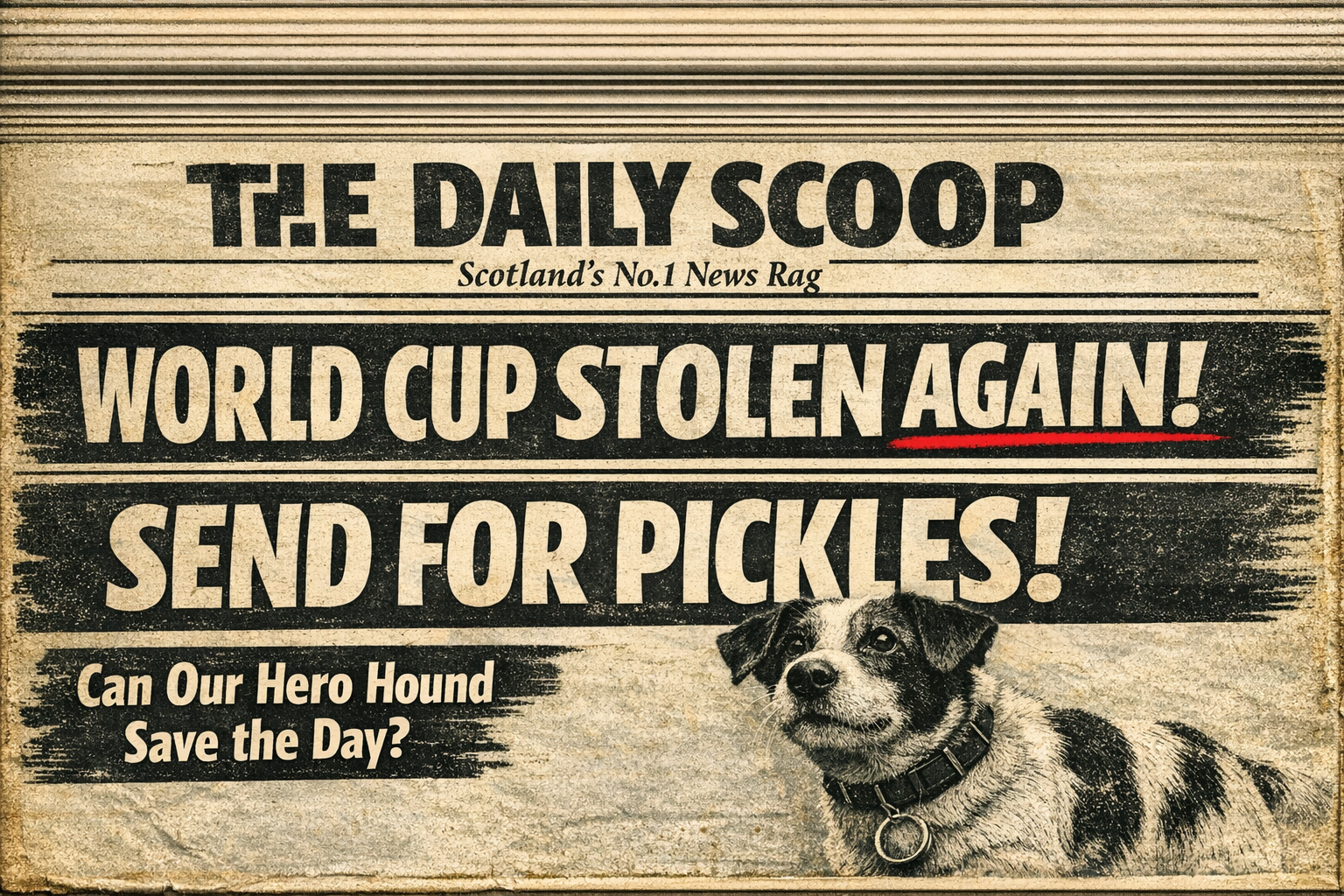
FIFA, YOU’VE RUINED MY WORLD CUP
Scotland has qualified for the World Cup.
Let me say that again, slowly, because it still feels like a hallucination brought on by too many early‑morning kickoffs and too many decades of disappointment:
Scotland. Has. Qualified. For. The. World. Cup.
Here. In. North. America.
Where I live.
Where my son lives.
Where the dream was supposed to finally come true.This should have been joy.
Pure, unfiltered, childhood‑level joy.
The kind of joy you bottle and keep forever.
The kind of joy you imagine the moment your son is born — one day, we’ll go to a World Cup together.
For twenty-two years, I’ve carried that dream.
Twenty‑two years of waiting, hoping, imagining the moment we’d stand together in a stadium, hearing “Flower of Scotland” at a World Cup.Instead, FIFA — the most corrupt sporting organization in human history — has sucked the marrow out of it like a starving vampire with a loyalty card.
But before we get to the modern circus, let’s go back.
Because this isn’t just a rant.
This is a lifetime of hope, humiliation, and heartbreak.1974 — Undefeated, Unrewarded, and Undone by Politics
My relationship with the World Cup didn’t begin with entitlement — it began with longing.
1974 should have been glorious. We were brilliant. Genuinely brilliant. Proper footballers.
Our first World Cup since the 1950s.
We went home undefeated — the only team in the entire tournament to do so — and still got knocked out.
Only Scotland could manage that.
But here’s the part the rest of the world never talks about:
We were undone by political machinations that had nothing to do with football and everything to do with corruption.
Zaire — dragged to the tournament by Mobutu, a dictator who treated the national team like a personal vanity project — played their first match against Scotland, and we beat them 2–0.
They played normally.
They hadn’t yet realized their promised money wasn’t coming.
Then the truth hit them like a sledgehammer:
Their appearance fees had been stolen, their bonuses siphoned off, and the players were being used as political props.
So they went on strike.
They refused to train.
They refused to play.
They told their FA they would not take the field again unless they were paid.
Mobutu’s response was simple and terrifying:
Play, or don’t come home.
So they agreed to appear for the next match — but not to compete.
And that’s how we got the farce of:
Yugoslavia 9–0 Zaire.
Zaire took the field under duress, barely moved, and made their point.
Yugoslavia ran up the score like it was a training exercise.
That nine‑goal swing warped the entire group.
Then — furious at the humiliation — Mobutu finally released the money.
The players were paid.
The strike ended.
And in their final match, against Brazil, Zaire actually played again.
They lost 3–0, but they competed.
They fought.
They tried.
Which means the only match where Zaire didn’t try — the only match distorted by politics, corruption, and coercion — was the one that decided Scotland’s fate.
The Yugoslavian goal difference was insurmountable — and it had nothing to do with football.
It was the first time we learned the lesson we keep relearning:
Scotland doesn’t just have to beat the teams in front of us.
We have to beat geopolitics, corruption, dictators, and the universe itself.1978 — Swagger, Tears, and the Summer of Humiliation
We were told we were brilliant, and that turned out to be the biggest hoax since the SNP. Tears, hopes, humiliation — the full Scottish emotional tasting menu.
There I was, resplendent in my Alan Rough perm, sitting in front of the telly in the summer heat, watching in absolute disbelief as Teófilo Cubillas dismantled the Ally MacLeod hyperbole machine in real time.
All that swagger, all that talk, all that “we’re going to win the thing”… evaporated in the Argentinian sun.
And I cried.
Real inconsolable tears.
The kind you only shed when you’re young enough to believe your country might actually be what the grown‑ups told you it was.
And because the World Cup is in summer and school was closed, I didn’t have to face my classmates the next day.
But humiliation has a way of finding you.
Even without the internet — no social media, no WhatsApp, no memes — my mates in London made it their mission to track me down.
They hunted me like bloodhounds on the scent of Scottish misery.
They made sure my humiliation was complete.
England hadn’t even qualified for Argentina, but that didn’t stop them from being smug arseholes about 1966 — the same mindset they still have today, 60 years later.
Still polishing that one trophy like Gollum stroking the One Ring.
And frankly, the statute of limitations has long since expired on that bloody thing — especially considering the World Cup was literally stolen, and the hero of the entire tournament wasn’t Bobby Charlton or Geoff Hurst…
It was Pickles the dog who found the trophy in a hedge while the English FA were still looking under the sofa cushions.
And let’s be honest:- There were only 16 teams in that tournament, and you cheated Germany to win
- And Scotland played you off the park in 1967
- Unofficial World Champions, with Jim Baxter taking the absolute piss
Humiliation.
Heartache.
And the kind of emotional scarring only Scotland can deliver with such consistency.1982 — The Toe‑Poke Heard Round the World
After 1978, we didn’t vanish.
We qualified for 1982, 1986, 1990, and 1998.
We just… achieved nothing.
Except one moment.
One glorious, stupid, fleeting moment – 1982. Brazil.
David Narey unleashes a screamer so outrageous the Brazilian press called it a “toe‑poke” out of sheer embarrassment.
For a few seconds, we dared to dream.
And then Brazil punished our audacity the way my headmaster used the strap to flay my hand — swiftly, brutally, and with a faint air of disappointment.
After 1998?
Oblivion.
A void.
A vacuum.
Or is that avoid?
The SFA staring into the abyss, and the abyss wearing an SFA blazer staring back.The Manager Who Never Could
Fast‑forward to the present.
And unbelievably, despite the results, despite the performances, despite the tactical war crimes… Steve Clarke is still the manager.
And he turns out to be, in my humble but accurate opinion, the worst Scottish manager in living memory.
A man whose win record looks like a misprint.
A man who picks squads based on regional bias and personal favorites, not talent.
And yet — somehow — we qualified.
Those last minutes against Denmark?
Decades of conceding late goals, throwing away leads, and inventing new ways to lose… undone in a single moment of cosmic mercy.
He got lucky.
We qualified not because of him, but in spite of him — carried by four near‑world‑class players he had absolutely nothing to do with, and three moments straight out of the Roy of the Rovers playbook.
But we got there.
And that’s all that matters.
Or it should have been.The Draw: Haiti, Morocco, and… Brazil. Of Course.
Haiti — fine.
Morocco — tricky.
Brazil — to paraphrase Indiana Jones:
Brazil. Why did it have to be Brazil?
But here’s the thing:
History tells me we’ll probably be out before we even get to Brazil.
Then we’ll beat them.
Then they’ll reach the final.
This is the Scotland Way™.
We don’t do normal.Enter FIFA: The Joy Vacuum
And then… FIFA arrived.
The most corrupt sporting organization in human history — and that’s not hyperbole, that’s courtroom fact.
They’ve expanded the tournament so much that qualifying barely means anything anymore — which, ironically, is the only reason Scotland are here.
And if you think 2026 is bad, wait until 2030, which will be hosted in six countries across three continents.
A World Cup so geographically deranged it should come with a chiropractor and a carbon‑offset subscription.The Ticketing Disaster: A Masterclass in Incompetence
This should have been simple.
It’s not.
Instead, we get:- Staggered sales
- Playoff cash grabs
- Lotteries
- Virtual queues that put you in the wrong line for three hours
- No tickets offered
- The internet is telling you what FIFA won’t
- Six‑hour queues
- Tickets sold out
- Except in hospitality
- And through the various ticket tout agencies
- Prices that would make a Bond villain blush
From my own experience:
$600 for Haiti. $2,500 for Brazil.
Do the math: the numbers are obscene before you even add travel.
And when we drew Brazil in Miami?
We were ecstatic.
It was always a dream to go to a World Cup with my son — a dream I’ve held for 22 years. And to see us against the best in World History. Amazing. Once in a lifetime stuff.
An American‑born Scot who supports the same cursed teams I do.
This was supposed to be our moment.
Our reward for all the early mornings, all the tears, all the “maybe next times.”
Now crushed.
By FIFA.
Who makes the SFA look competent — and I can’t believe I just wrote that sentence.
By June, $7,500 might not even fill your gas tank.
And for three games without travel, I’d be looking at nearly $20,000 to follow the country that invented the sport… in the country I live in… where it costs me $20 to watch my local MLS team.
If I could even get the tickets.And What About Us? The Ones Who Built the Game Here?
And here’s the part FIFA will never understand, because they don’t care enough to even pretend:
What about the rank‑and‑file supporters in this country who actually built the football culture they’re now cashing in on?
Where was our ticket window?
Where was the acknowledgment that the game didn’t grow here because of FIFA, or CONCACAF, or the USSF, or whatever faceless committee of nobodies is allegedly running the sport this week?
It grew because of us.
Because of the people who bought season tickets to watch Sunday‑League hammer‑throwers masquerading as professionals.
Because of the people who endured plastic pitches, retirement‑tour superstars, and franchises with names that sound like they were generated by a malfunctioning marketing algorithm.
Because of the people who turned up anyway — week after week — inventing new ways to be passionate about a D‑list version of world football.
We did all this in a country that, for most of that time, didn’t even know what offside was.
Hell, I still get mad when Americans say “offsides.”
Plural.
Like it’s a bloody shopping list.
We watch enviously as the Premier League, LaLiga, Serie A beam into our living rooms every weekend — real football, real atmospheres, real stakes — while US Soccer, MLS, and the USL fight over who gets to run the footballing equivalent of the Harlem Globetrotters.
And the fans?
We’re the Washington Generals.
Perennial losers.
Turning up anyway.
Cheering anyway.
Carrying the sport anyway.
We built this.
We made this a viable football country.
We created the culture, the noise, the atmosphere, the demand.
And what do we get?
Nothing.
No priority window.
No recognition.
No “thank you for carrying the sport in a hostile landscape for 30 years.”
Just a shrug and a hospitality package.
Not everyone here cares about the USMNT.
Some of us have heritage, identity, bloodlines, stories, scars.
Some of us are more passionate about where we come from than the people still living there.
And FIFA looked at all of that — all of that passion, all of that loyalty, all of that cultural graft — and said:
“Nah. Give the tickets to the global supporters’ groups and the corporate boxes.”
An expansion opportunity so obvious even the SFA wouldn’t have missed it.
And yet here we are.The People’s Game — Stolen
Football is the people’s game.
Working class.
Genuine.
A release from the grind of the week.
Not a revenue stream for gangsters in suits.
As John Lennon said at the Royal Variety Performance:
“Will the people in the cheaper seats clap your hands? And the rest of you, if you’d just rattle your jewellery.”
Well, FIFA has made sure there are no “cheaper seats” left.
Just rich people rattling their jewelry while the rest of us watch from home.
Football without real fans is nothing.
A vacuum.
A void.
Or is that avoid?
They may steal our money, but they’ll never take our FOOTBALL.
I think William Wallace said that.
(Factually as accurate as Mel Gibson’s movie.)So What Does FIFA Stand For?
Let’s be honest:
FIFA doesn’t stand for Fédération Internationale de Football Association anymore.
It stands for:
Fuckers
In
Financial
Arrogance
And to them, from me, from every Scotland fan, from every supporter priced out of their own dream:
Shut. The. Fuck. Up.And After All That…
Those tears from 1978 are back —
But they’re different now.
They’re not the tears of a boy watching Cubillas tear his country apart.
They’re not the tears of humiliation delivered by mates who hunted me down just to twist the knife.
These tears are something else entirely.
They are tears of frustration.
Tears of anger.
Tears for my beautiful game.FIFA BY THE NUMBERS (2026)
An epilogue in cold print, because sometimes the numbers hurt more than the words.
When the shouting stops and the anger settles, the numbers tell the real story.
This is the most expensive World Cup ever staged, and the financials aren’t just high — they’re obscene.
FIFA received over 508 million ticket requests, a global feeding frenzy created by scarcity, secrecy, and the illusion that ordinary supporters had a chance.
Their revenue projection for this tournament alone exceeds $10 billion, with the full four‑year cycle expected to hit $13 billion — a 72% increase over the previous cycle.
Official ticket prices — before FIFA’s mandatory fees — range from $140 to $8,680, with dynamic pricing pushing some matches up by 50% between sales windows.
A $2,790 final ticket quietly became $4,185.
Group‑stage matches involving host nations routinely sit between $355 and $2,735, and that’s before the 15% service fee FIFA adds at checkout.
Hospitality packages start in the five figures.
Secondary markets are already listing popular matches in the tens of thousands.
And the mythical $60 ticket FIFA loves to brag about?
It exists — but only in tiny allocations to national federations, never to the general public.
This isn’t a celebration of football.
It’s a revenue extraction model wearing a scarf.
And when you add it all up — the queues, the lotteries, the dynamic pricing, the corporate boxes, the gouging, the secrecy, the sheer financial violence of it all — the conclusion is simple:
FIFA didn’t just price out fans.
They priced out dreams.And Finally… FAFO
There’s one more four‑letter abbreviation that begins with F.
FAFO.
And FIFA just did.
They’ve pushed supporters past the breaking point.
They’ve priced out families, dreams, and decades of loyalty.
They’ve turned the world’s game into a gated community for the wealthy and the well‑connected.
Hopefully, this will signal the beginning of the end for the most corrupt regime since Mobutu’s Zaire.
Because football fans have long memories, short tempers, and an unshakeable belief in what the game should be.
Those days are past now, and in the past they must remain — but it’s time for football fans to rise up and take back our game. -
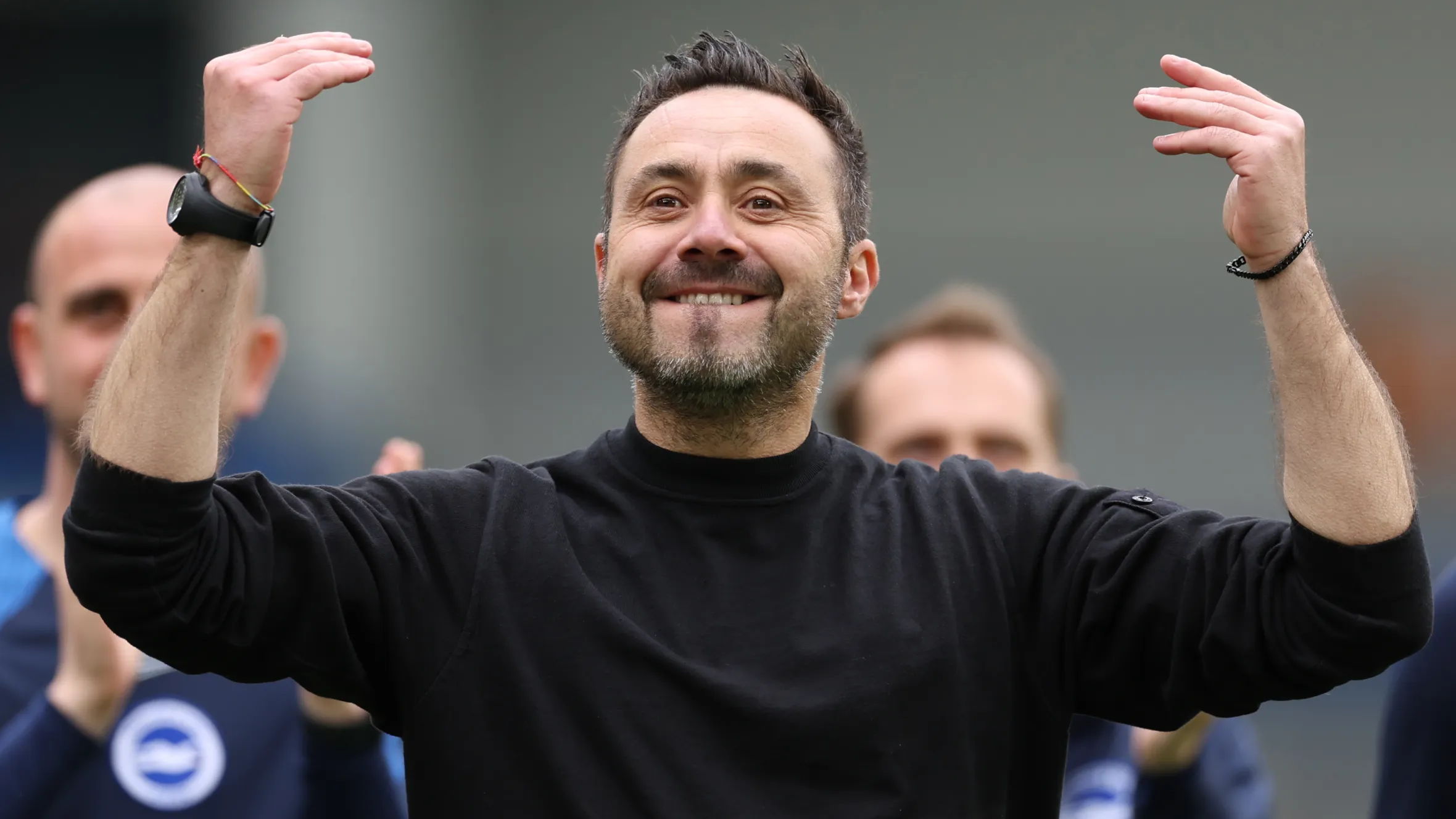
GET OUT OF THE WAY
I want to be absolutely clear from the outset: I do not support violence against women, discrimination, or any attempt to minimize the seriousness of abuse. That is not who I am, and it is not who we are as a supporters club.
But the reaction to Roberto De Zerbi’s appointment has exposed something uncomfortable about modern football culture — and, frankly, about society. We’ve reached a point where people are so quick to condemn, to label, to divide, that any sense of proportion or consistency disappears. Everything becomes a purity test, and no one can pass it.
Let’s deal with the facts.
Marseille signed Greenwood — not Spurs.
De Zerbi didn’t sign him. The club he worked for made that decision. And we are not signing Greenwood now. Yet somehow De Zerbi is being treated as if he personally committed the offense.
As The Times put it:
“Nobody is defending Greenwood’s alleged actions, or downplaying the seriousness of the original accusation. De Zerbi, however, has committed no crime beyond remaining faithful to the idea of second chances.”
That’s the truth. And the outrage becomes even harder to take when some of the same people condemning De Zerbi are the ones who still idolize Gazza — a man with a documented history of domestic violence. Selective morality is still selective, even if he was a genius on the pitch.
Greenwood is, in my view, a contemptible individual. But he reconciled with his partner, they remain together, and they’ve built a family. You can acknowledge that reality without endorsing him. You can condemn the behavior while recognizing that life is more complicated than social‑media outrage allows.
Now, let me be clear about something else:
I don’t like the appointment of De Zerbi either — but for footballing reasons.
He feels like yet another underwhelming, uninspired choice in a long line of managers we seem to convince ourselves will be “the one.” My issue with him has nothing to do with Marseille, Greenwood, or moral grandstanding. It’s simply that he’s another disappointing nonentity we’ve talked ourselves into.
And here’s the real point I’m making:
You can support a country, a club, or an institution without supporting every individual associated with it.
America is, in my view, horrible because of Donald Trump — but it is still possible to support America without supporting him. The same principle applies here. You can support Spurs without agreeing with every decision the club makes. You can support the idea of second chances without excusing the original wrongdoing.
De Zerbi supported a second chance for a player. That is not a crime. That is loyalty to the organization he worked for. And loyalty is something we, as supporters, claim to value.
For once, can we just SHUT THE FUCK UP and get out of our own way and focus on keeping Premier League football at White Hart Lane — or whatever we’re calling it now. -
THAT’S TOO GOOD TO BE TRUE
April Fools’ Day Edition — A Public Service Announcement for the Chronically Gullible
Today is April Fools’ Day — the one day of the year when the world expects to be lied to.
Which makes it the perfect day to address the people who fall for lies the other 364 days without hesitation, reflection, or a single functioning neuron firing in protest.
Let’s begin with my favorite modern mantra:
“Well it was on Facebook ads, so it must be true.”
Aye.
And I’m the second coming of Neil Diamond.
Facebook ads are not endorsements.
They’re not vetted.
They’re not curated.
They’re not even glanced at by a human being.
They’re just paid placements — the digital equivalent of a guy in a trench coat whispering, “Pssst… want to buy a Rolex?” behind a Wal‑Mart.
And yet people treat them like gospel.LET’S BE CLEAR: I HAVEN’T BEEN SCAMMED — I PAY ATTENTION
Before anyone gets clever in the comments, let’s set the record straight:
I haven’t been scammed today.
Or yesterday.
Or recently — because I actually look at what I’m clicking.
Have I been scammed before?
Aye, of course I have.
We all have.
But here’s the rule I live by:
Fool me once, shame on you.
Fool me twice, I’m just a fucking idiot.And I refuse to be that idiot.
But because I’ve been hat‑shopping lately, the mystical Facebook algorithm has decided to bless me with “exclusive deals” from the gods.
And by “gods,” I mean the same shady drop‑shippers who think a cowboy hat and a sepia filter are enough to fool the masses.
So let’s take one of these divine gifts and hold it up to the light.
Let’s talk about Bull Hat Co — or as it should honestly be called:
Bull Shit Co.
And here’s why.THE BULL HAT CO SYNDROME
Bull Hat Co is a site so new it still has placenta on it.
A trust score lower than a used car salesman’s handshake.
Reviews that read like they were written by people who escaped a hostage situation.
But because it shows up on Facebook with a moody cowboy photo and a Yellowstone‑style font, suddenly it’s the second coming of Stetson.
This is the part where I say, with love:
Shut the fuck up. It’s too good to be true.THE POP‑CULTURE BAIT‑AND‑SWITCH
Here’s the new scam tactic:
Use collateral from Yellowstone, Jurassic Park, Sons of Anarchy, or whatever franchise is trending this week, and slap it onto a $12 Alibaba hat.
People see a cowboy silhouette and think, “Oh, that must be official.”
People see a dinosaur and think, “Universal Studios would definitely sell merch for $19.99 shipped.”
Meanwhile, I — a person who actually holds licenses — have seen Facebook ads selling my own $1,200 pieces for $49.99.
Let me repeat that for the people in the back:
Facebook ads are selling my licensed $1,200 collectibles for $49.99.
Do you think anyone ever received one?
Of course not.
And if they were real at that price?
I’d buy a hundred myself.
Save a fortune on production.
Skip the sea freight.
Still make a profit.
It’s my license after all.
But they’re not real.
They’re not licensed.
They’re not even products half the time.
They’re bait.
And the crossed‑out price is the hook.THE “SALE” THAT WAS NEVER A SALE
Here’s another massive red flag — and scammers use it because it works on almost everyone:
They take the real price, cross it out, and reveal a fake “new low price” like it’s a sale.
It’s the oldest psychological con in retail.
It’s the same tactic as those storefronts in Manhattan that proudly display:
GOING OUT FOR BUSINESS
Not “Going Out of Business.”
Not “Closing Down Sale.”
No — “Going OUT FOR Business,” which means absolutely nothing, but your brain fills in the missing word because that’s what brains do.
We don’t actually read.
We predict.
We digest what we expect to see after the first few letters.
It’s a cognitive shortcut — brilliant for survival, terrible for online shopping.
So when you see:
$1,200 $1,200 NOW $49.99!!!
Your brain doesn’t say,
“Hmm, that seems economically impossible.”
It says,
“Bargain!”
They’re illusions designed to make your wallet leap out of your pocket like a trained circus animal.WHY PEOPLE FALL FOR IT
It’s not stupidity.
It’s hope.
People want to believe they’ve found a secret deal.
They want to believe they’re the exception.
They want to believe they’ve outsmarted the system.
But bargains don’t work like that.
Licensing doesn’t work like that.
Manufacturing doesn’t work like that.
Reality doesn’t work like that.
Scammers rely on one thing:
Your willingness to suspend disbelief long enough to click “Buy Now.”THE RULE
Here it is. The whole thesis. The gospel according to common sense:
If the price looks like a typo, the website looks like a school project, and the ad looks like it was made by someone who’s never seen the product in real life — shut the fuck up. It’s too good to be true.THE WOLF’S QUICK TEST FOR SPOTTING BULLSHIT
If you see any of these, run:- Domain younger than your last haircut
- No physical address
- No phone number
- Prices that defy capitalism
- Stock photos stolen from Google Images
- Reviews written by bots who learned English yesterday
- Ads using Yellowstone, Jurassic Park, or your own licensed products
- A crossed‑out “original price” that was never real to begin with
If it fails even one of these tests, congratulations — you’ve found a scam.
THE SIGN‑OFF
It’s April Fools’ Day.
But some of you have been celebrating all year.
Don’t be a fool today.
Don’t be a fool tomorrow.
And for the love of sanity:
Shut the fuck up when it’s too good to be true.
Beware the moon. -
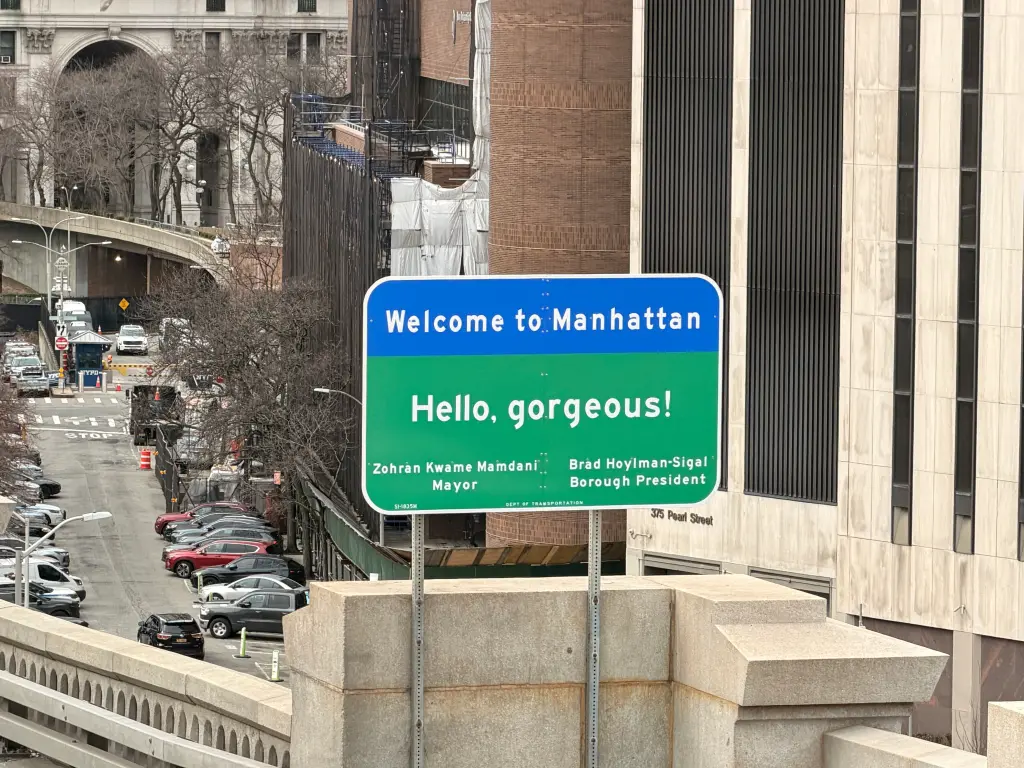
LIVE VIEW INSIDE MY BRAIN
90s Diagnosis: Hyper ADHD. My description: High Functioning ADHD
Manhattan has unveiled a new welcome sign that reads Hello gorgeous! — lowercase g, no quotation marks, and therefore a personal affront to anyone who cares about accuracy, typography, or the basic dignity of civic signage.
As someone who has loved Funny Girl since before I could spell “Ziegfeld,” I’m delighted they chose the line… but let’s get the facts straight:Fanny Brice was born in Manhattan.
Barbra Streisand is from Brooklyn.
There is no evidence the real Brice ever said “Hello, gorgeous.”
The line is from the movie, spoken by Streisand as Brice.
If you’re quoting it, use the quotation marks.
If you’re stylizing it, capitalize the G.
The Wolf Style Guide is not ambiguous.
Still — it’s infinitely better than Welcome to the Free State of Florida (where nothing is free, btw), which has all the charm of a pothole being treated as a landmark.
And yes, I’m absolutely in favour of every municipality adopting a movie quote as its motto. Manhattan choosing camp is exactly the kind of fabulous energy I expect from a borough that wakes up every morning already convinced it’s the star of the show.
And naturally, because my brain can’t resist a detour, I immediately thought:
If Orlando tried “To infinity and beyond,” Disney would sue before the paint dried.
Which brings me to the next thought spiral:
Did Manhattan have to pay for using the line?
Short answer: probably not.
Long answer (because of course):Funny Girl film rights sit with Sony; stage rights with Tams‑Witmark / Concord Theatricals.
A direct quote can require licensing in commercial use.
BUT short phrases are often considered too small to be protected unless trademarked.
Municipalities avoid licensing by removing quotation marks, changing capitalization, or treating it as a slogan, not a quote.
Which is exactly what Manhattan did.
The lowercase g and missing quotation marks aren’t just ugly — they’re strategic.
And now that everything has come full circle — the history, the style guide, the civic shade, the legal loophole, and the Broadway glamour — I can finally get my first coffee.
You’re Welcome.