Author: AngryWolf

  • HULK WAS THE GIMMICK — THE MAN WAS A COLOSSUS

    HULK WAS THE GIMMICK — THE MAN WAS A COLOSSUS

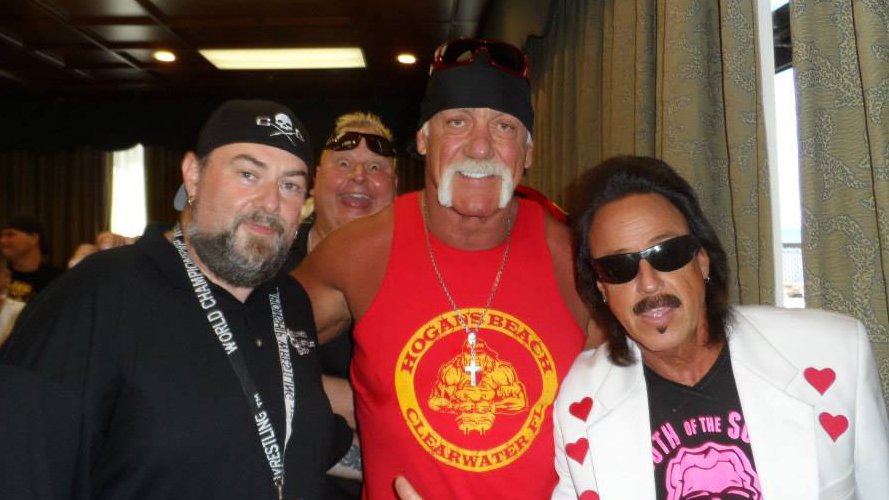
    I finally watched the new Hulk Hogan: Real American series on Netflix. It took me a while. Hulk has always been a polarizing figure, even for me, and it’s hard to separate the character from the person. I didn’t think I knew him well, but the times I spent with him were genuine, and my memories reflect that. He was always kind to me. He’d interrupt Jimmy’s calls just to shout “Hi Brother” from the background. He sent signed birthday gifts. He helped me through the XWF mess. He managed how Roddy regarded me and helped him trust me. When Brutus or anyone else was being difficult, Hulk handled it quietly. He valued that I kept things private and didn’t make myself the story, unlike many photographers and journalists. Nothing was ever too much trouble to ask him for. Whenever he met my son, he was more than gracious.

    One thing the documentary didn’t fully capture — but I lived — was how the true greats never resented Hulk’s presence. Sting. Rick Rude. Mr. Perfect. Lex Luger. They were all acknowledged stars, and they understood exactly what Hulk brought with him. They didn’t shrink. They didn’t complain. They knew what standing next to him meant for business. And then there was Randy Savage. I saw that dynamic up close. No matter how far apart they drifted, they were Ali and Frazier — destined to orbit each other, destined to collide, destined to define each other. That kind of rivalry is cosmic. You don’t choose it. It chooses you. Ric Flair? Same thing. Two all‑time greats who understood their value — to the business, to the fans, and to each other. They protected themselves, but they also protected the dance. They knew the business needed both of them to survive.

    Seeing Dusty Rhodes acknowledged was special. People call him a gift to wrestling for a reason. He saw things others missed. He was one of my biggest mentors, along with Jimmy. He would sit and talk with you as if there was no rush. He was humble and had real vision. I don’t think anyone understood wrestling better than he did. He is deservedly the most cited figure in any wrestling documentary.

    The documentary’s ending destroyed me. I knew how the story ended, but seeing him three weeks before… seeing him still Hulk… it was shocking. How does someone that larger‑than‑life fade that fast? And then you get the people taking credit for things they barely touched. The ones who rode the train all the way to retirement. The ones who suddenly want to be historians. Hearing HHH acknowledge Hulk’s importance, then telling people they didn’t have to pay their respects, was galling. Pay your fucking respects. Heavy is the head that wears the crown — and nobody since has worn it with more dignity and less self‑preservation. Wrestling is a brutal business. Very few succeed. Even fewer reach the summit. And almost none stay there. Look at your big contracts, your days off, your luxury houses, your mainstream exposure. You’re not wrestling on some backwater channel at 2 AM anymore. As much as Vince McMahon repulses me, a lot of my friends have better lives because of him. Same with Hulk.

    Bret Hart… how bitter can one man be? You had it all. A career people would kill for. A legacy most wrestlers only dream of. And yet every time, it’s the same tired list of villains: Goldberg, Hogan, Warrior, Michaels, Davey Boy… all unfit to lace your boots, all horrible people. We get it. But maybe turn that mirror around. You talk about people being stuck in their gimmick — you’re the dictionary definition. You destroyed your own legacy. Bitter is not a good look, and it’s exhausting.

    Kevin Nash, who has more reason than anyone to be bitter, carries himself like a prince. Funny how that works.

    WrestleMania 18 — the match with The Rock — that should’ve been the ending. The perfect final chapter. The crowd, the energy, the moment — lightning in a bottle. A career‑defining sendoff that most wrestlers would sell their souls for. But it wasn’t the end, and there was so much more that could’ve been built in a better way. So many more chapters that could’ve been written. The man still had presence, charisma, and the kind of mythic aura you can’t manufacture. He could’ve pivoted, reinvented, evolved — if the right people had been around him, if the right advice had been given, if the noise hadn’t drowned out the human being underneath.

    And that’s the part that hits hardest. For someone who was constantly surrounded by people — and they say it frequently in the documentary — how was he so alone? How does a man with an entourage end up isolated? How does the most recognizable face in wrestling history become the loneliest man in the room? That’s the tragedy nobody talks about.

    I can’t ignore the party scene, the drugs, or the chaos that came with sudden fame. The steroid era happened. It was a different time, and in many sports, people didn’t think they were doing anything wrong. Living as both Hulk Hogan and Terry Bollea blurred the lines. The public wanted the superhero, not the person. I understand the pressure of having to be the character everyone expects, even when it’s hard to keep up. That’s where the loneliness starts — when the real person gets lost behind the image.

    The political side of his public image always felt off to me. I didn’t like where it went, and it didn’t match the person I saw in private. Privately, he voted — and he voted for Trump twice — but he did it quietly, thoughtfully, without the noise or the showmanship people assume. That was the version of him I believed, even if I didn’t know him as well as I would’ve liked. Then Butler happened, and suddenly he was publicly all‑in. That shift never felt like it came from him. Most public figures don’t want to alienate half their fan base. The man I believed in wasn’t driven by outrage or ideology. He was driven by loyalty, by the people around him, and sometimes those people weren’t giving him the best guidance. That gap between who he was in private and how he appeared in public stayed with me more than anything he ever said.

    And I’ll be honest — I hated seeing Trump all over the documentary. Not because of politics, but because it dragged me right back to the 90s, when I had the sense and the guidance to avoid working for his companies. Same with Vince. Different men, different worlds, but the same instinct: stay clear. I kept my hands clean from both of them, and watching the documentary reminded me exactly why. It was strange seeing Hulk step into that space publicly when the private version of him never matched it.

    Watching the documentary took me back. Hulkamania in the WWF. Then Hulk arrived in WCW — and how disappointing everything was at first. Not his fault. WCW didn’t know how to market what we had. They listened too much to the sheets, the early internet, the smarks. Then the nWo hit, and everything changed. If only I’d slowed down and smelled the roses. Nothing lasts forever.

    The last time I saw him was at WrestleReunion 2013 in Clearwater. He wasn’t advertised and didn’t have to be there, but he showed up anyway. He came to see Jimmy, Bobby Heenan, the Nasty Boys, Demolition, Koko, Mean Gene, his friends, and the fans. He sat, talked, and signed whatever people wanted. That was just who he was.

    The real People’s Champion.

  • SPAM SPAM SPAM

    SPAM SPAM SPAM

    There’s a moment when the usual annoyance turns into something nastier. It stops being background noise and starts feeling like a personal vendetta. Relentless. Like someone’s declared war on my time, my patience, my sanity, and every bloody gadget I own. I’m way past being irritated. I’m past the eye-rolls and the polite sighs. I’m under siege. No breaks, no mercy, just a constant barrage.

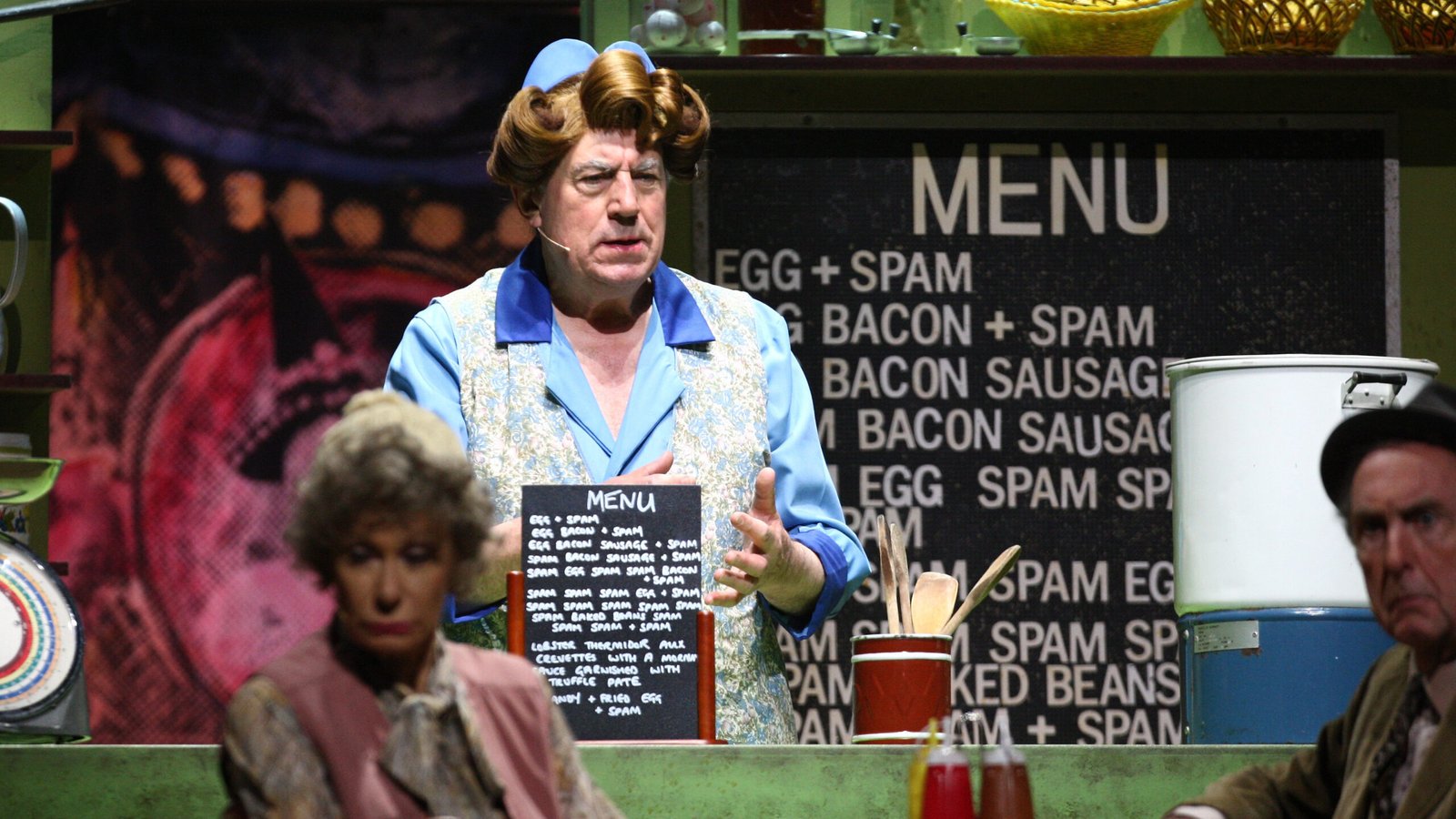
    And the worst part? Monty Python warned us. They tried to tell us. They gave us the blueprint decades ago.

    “Have you got anything without spam?”
    “Well, there’s spam egg sausage and spam, that’s not got much spam in it.”
    “I don’t want ANY spam!”

    What used to be a harmless joke is now my daily reality. Lucky me.

    In my world, the waitress is Verizon, AT&T, Outlook, and every botnet this side of hell. No matter what I ask for, they just heap more spam on my plate and act like they’re doing me a kindness.

    Let’s talk phones, because that’s where the insanity really screams. At work, I get at least twenty-five spam calls before I’ve even had my first cup of tea. My Verizon cell? Twenty more this morning, and that’s just before noon. Every single one is some spoofed number, pretending to be local, pretending to be someone I might actually give a damn about. They’re built to trick you. And sometimes, aye, they do. Sometimes the number looks just familiar enough that you answer before your brain catches up.

    And then it hits. That dead pause. The giveaway silence before the robocall system connects you to some chancer in a call center halfway around the globe. That half-second where your brain screams, ‘Not this shite again.’ Then, right on cue, the voice pipes up, always with the same fake cheer: ‘Hello Colin…’

    And that’s when the reflex kicks in. The hard shutdown. The verbal eject button. SHUT THE FUCK UP … take me off your fucking list, you useless CUNT! The thing people think is a catchphrase, but is actually a survival mechanism. Because when you’ve been hammered by this garbage day after day, week after week, year after year, you stop entertaining it. You stop being polite. You stop giving them a chance to get a word out. You shut it down instantly because if you don’t, they’ll keep going, and going, and going. It’s not rudeness. It’s self‑defense.

    Meanwhile, Verizon, the same lot who sold me the phone, bill me every month, and swear blind their Call Filter is ‘active,’ can’t even get their own app to work on their own bloody network. I spent twenty-eight minutes on the phone with them today. The grand result? ‘We need forty-eight hours to investigate.’ Forty-eight hours to figure out why their own software won’t launch. Brilliant. Absolutely brilliant.

    Email’s no better. Between home and work, I’m drowning in over eighty spam emails a day. Gmail actually does its job, but Outlook? Outlook’s like a hall monitor who’s nodded off at his post. The worst rubbish just waltzes in, fake mustache and all. I’ve set up rules, filters, blocklists, safe senders, unsafe senders—you name it. Outlook still lets half the junk through, acting like it’s doing me a favor.

    And then there’s the websites. Mine are locked down tighter than a medieval fortress. Firewalls, bot blockers, CAPTCHAs, honeypots, rate limits, blacklists, anti-scraping gadgets—you name it, I’ve thrown it at the wall. Still, the bots get through. It’s like building stone walls, towers, boiling oil, archers, and the enemy just parachutes in anyway. They scrape, they poke, they attack, round the clock. Sometimes I wonder if the folks making the blockers and the folks making the bots are the same people, because the arms race is too perfect. One side patches, the other side levels up. I’m just trying to run a normal site, and the bots treat my forms like a public toilet.

    Here’s the ugly truth. Your phone number and email are in more databases than you can count. Those lists get sold, swapped, leaked, scraped. Robocallers use auto-dialers to blast out millions of calls. Spoofing makes them look local. Bots scrape websites for contact forms. Email spam pours in from hacked servers and botnets. Blocking one number is pointless—they just spin up thousands more. The carriers are always playing catch-up. Filters only react, never prevent. Once you’re in, you’re never getting out.

    It’s not personal. It’s just volume. Massive, industrial-scale, soul-crushing volume.

    So yes, I’m under siege. You’re under siege. Anyone with a phone, email, or website is under siege. Spam calls. Spam emails. Spam bots. Spam texts. Spam bloody everything. And the worst part? We’re just supposed to live with it, like it’s the weather. Like it’s normal. Like it’s fine. Spoiler: it’s not.

    Well, I’m done pretending it’s fine. This is my rant. This is my line in the sand. I’m saying it loud and clear: SPAM SPAM SPAM. I don’t want any FUCKING spam.

  • JEWISH BY BLOOD, NOT BY BELIEF — AND WHY THAT MATTERS

    JEWISH BY BLOOD, NOT BY BELIEF — AND WHY THAT MATTERS

    I was today‑years‑old when I finally understood the difference between being Jewish and practicing Judaism. It sent me down a path that connected ancestry, religion, identity, and history in ways I never expected. Right now, with politics and religion so tangled, it’s hard not to feel pulled in two directions. My DNA shows I’m Scottish on one side, Jewish on the other. For a long time, that felt like being caught between two identities, two histories, two worlds.

    That moment marked a turning point, reshaping the way I saw myself and the world around me. The truth was older, stranger, and more deeply human than I had ever imagined.

    What I learned is that my Jewish ancestry has nothing to do with religion. Judaism is the faith. Jews are the people. And those people existed thousands of years before the religion ever took shape. DNA doesn’t measure belief; it measures ancestry. And that ancestry goes straight back to the ancient Levant, long before anyone had ever heard of Judaism, Christianity, or Islam. The people who eventually became the Israelites were part of the same ancient world as the Canaanites, Phoenicians, Arameans, and early Arab tribes. All of them came from the same deep human layers that formed in the cradle of civilization — the region stretching across ancient Iran, Mesopotamia, Anatolia, and the Levant.

    What finally brought clarity was the realization that one can be Jewish without being a Jew in the religious sense. The English language, in its simplicity, uses a single word to describe both ancestry and belief, though they are not the same. When DNA speaks of ‘Jewish,’ it means lineage, not faith. Yet most people hear belief, and in that misunderstanding, confusion takes root.

    With that understanding, another truth emerged. The Scots—my other half—are woven from the same ancient story. Not in a literal or theological sense, but in the deep, human sense that predates nations and names. Before Scotland, before Celts, Picts, or Gaels, the ancestors of the Scots were shaped by the same early migrations that flowed from the cradle of civilization. Early farmers and herders, ancient peoples who left the first cities and fields, moved north and west over thousands of years, mingling with Ice Age hunters and the peoples of the Steppe. From that long mingling rose the early Celtic cultures, and from them, the Gaels, the Picts, the Britons, and, in time, the Scots.

    In reflecting on all this, I saw that I had spent years believing I belonged to two opposing worlds, when in truth, both sides of my ancestry were distant kin long before either bore a name. The people came first. The faiths followed. Politics arrived much later, a recent chapter in a much older story.

    What is hardest to grasp is that the divisions we see today are far younger than the bonds we share. My DNA does not divide me; it reminds me that we all began in the same place, and the boundaries we draw now are recent, set against the long sweep of human history.

    Today, years old, and suddenly aware that my ancestry is older than any religion, older than any nation, older than any label we use today. We all came from the same cradle. We just wrote different chapters afterward.

  • BIRTHDAYS: I STILL DON’T UNDERSTAND

    BIRTHDAYS: I STILL DON’T UNDERSTAND

    It’s been a while since I UNLEASHED. Life has been a carousel of busy, sick, busy again, and then suddenly today arrived — my birthday. Before anyone starts bouncing around with well‑meaning enthusiasm, let me be clear: birthdays have never been my thing. Not because I’m miserable about them, but because I genuinely don’t understand the concept when it comes to myself.

    I know how to make birthdays special for other people. I can build a day, a moment, a memory. I can theme it, shape it, elevate it. But for me? I never had that growing up, so I never missed it. And when adulthood rolled in, and I tried to create something meaningful for myself, it felt hollow. Manufactured. Like adding another task to the list. No matter how much I spent or how clever the idea, it never felt special — it felt like work.

    Then came the era when people actually wanted to make it special for me. And that’s when I realized I had absolutely no idea how to react. Compliments bounce off me. Gifts make me awkward. Attention makes me want to hide behind the nearest large object. So I did the simplest thing: I tucked the date away and moved on.

    But here’s the truth beneath all that bravado. I genuinely appreciate every single person who takes a moment out of their day to send a greeting. I may not know how to receive it gracefully, but I feel it. Deep inside, beneath the persona, I’m still private and shy. The persona — the one people see, the one that fills rooms and carries the weight — that’s something I built. A shield forged from a lifetime of disappointments, rejections, and standards I was told to meet but never quite reached in my own mind. It’s armor, not arrogance.

    But even with all that armor, there’s still a part of me — the part I pretend doesn’t exist — that watches the names on the Friends’ List every year. AngryWolf looks at the ones who don’t say a thing, don’t send a message, don’t even drop a lazy emoji, and he feels the list should be culled. Trimmed. Pruned like a tree that’s grown wild. It’s petty, it’s ridiculous, and it’s absolutely beneath the persona I built… but it’s there. And maybe that’s the most embarrassing part of all this: the quiet truth that even someone who doesn’t understand birthdays still notices who remembers, and who doesn’t.

    So today, instead of cake or candles or forced celebration, here’s something better: perspective.

    A fun fact to lighten the mood on a day I don’t quite “get.” 1900 is the point I now stand halfway from.

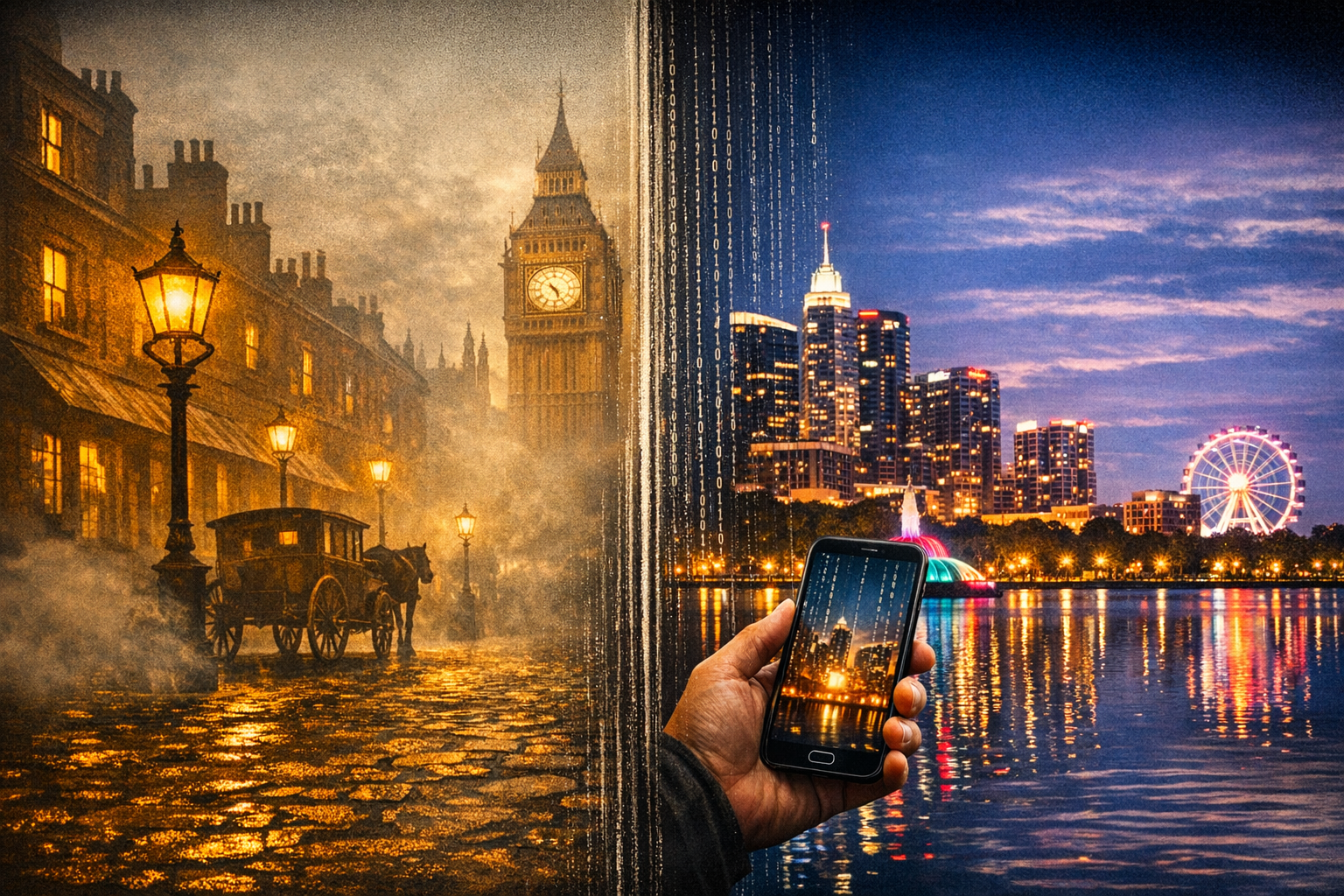
    Let that settle. Sixty‑three years before I arrived, Queen Victoria was still on the throne. The British Empire was still a thing. People traveled by horse, steam, or sheer stubbornness. And sixty‑three years after? We’re livestreaming from glasses, arguing with AI, and carrying supercomputers in our pockets. I am standing at the midpoint of a 126‑year arc stretching from Victorian Britain to the digital age.

    And if you want to know what 1900 looked like, it wasn’t quiet. Britain was deep in the Second Boer War, fighting in South Africa. America was a young 124‑year‑old nation with a population of about 76 million. Animals we’ve since lost — the passenger pigeon, the thylacine, the Caribbean monk seal — were still alive. Queen Victoria was in her final full year. The Labour Party had just been founded. The Daily Express printed its first issue. The first council estate opened. Tonga became a British protectorate. Cars were still a novelty, and a 1,000‑mile motor trial was considered heroic. Influenza outbreaks, anarchist attacks, and tennis tournaments all shared the headlines. I don’t know why I care about tennis — I really don’t — but apparently even in 1900 it was causing a fuss.

    Football, though — proper football — that’s different. Even back then, the game was already carving out the world I’d eventually grow up obsessed with. Aston Villa were champions of England. Bury lifted the FA Cup after battering Southampton 4–0 at Crystal Palace. North of the border, Rangers took the Scottish League, while celtc won the Scottish Cup. And in the annual England v Scotland match at Celtic Park, Scotland absolutely thumped England 4–1 in front of a crowd so big no one could agree on the number. Some things never change.

    When I was born, Victoria had been gone for only 63 years. The Wright Brothers’ first flight was just 60 years old. America was 187 years old — it’s now 250. The world population was 1.6 billion; now it’s over 8 billion. The world I entered was closer to Victorian Britain than it is to today.

    So no, I don’t “celebrate” my birthday. But I do acknowledge it. Not as a party, but as a marker. A reminder of distance traveled, battles survived, and the strange, stubborn fact that I’m still here — still learning, still uncomfortable, still trying to understand what it means when people say “Happy Birthday.”

    And that, in its own quiet way, is enough.

  • CARDS AGAINST HUMANITY — THE LOWEST POINT IN HUMAN DEVELOPMENT

    CARDS AGAINST HUMANITY — THE LOWEST POINT IN HUMAN DEVELOPMENT

    Here’s a bit of honesty for you: when someone says ‘game night,’ what they really mean is ‘let’s drag out Cards Against Humanity and pretend we’re all having a riot.’ Well, I’m done. I’ve played it, suffered through it, and faked enough laughs to last a lifetime. I’ve done my stretch. Paroled. Never going back.

    Cards Against Humanity isn’t a game. It’s a factory-made brain drain, all dressed up in a black box, like a funeral for your intelligence.
    The whole idea is a sad joke: slap something crude on a card and watch the sheep laugh. That’s not comedy, that’s just embarrassment with a price tag. It’s like a bunch of teenage boys finding their old man’s dirty magazines and thinking sniggering at naked women makes them interesting.

    You don’t play Cards Against Humanity, you just endure it. No strategy, no spark, no cleverness, just a conveyor belt of cheap gags that hit the floor like a cold shepherd’s pie. It’s like being forced to watch someone else heat up leftovers, only you’re not allowed to leave. Whoever wins is just the one who’s best at being daft. Congratulations, you’re King of the Idiots.

    The pace? Like watching a car crash in slow motion, only less exciting. In the first round, someone snorts when a card says something rude. Five minutes later, you realize you’ve signed up for a marathon of recycled filth and forced laughter. Everyone’s faking it because if anyone admits the truth, the whole night falls apart. This isn’t a party game; it’s a test of who can keep up the charade longest. It’s like Laurence Olivier torturing Dustin Hoffman in Marathon Man, but at least there was a cure for that pain.

    And don’t get me started on the fake edginess. CAH likes to pretend it’s the wild child at the party, but it’s just lazy. It doesn’t push boundaries, it tiptoes around them like your uncle after too many pints, thinking he’s a rebel because he made a rude joke at Christmas dinner. If you want to be edgy, try being clever. If you want to be bold, try being original. If you want to be funny, actually put in some effort. CAH does none of that. It’s a beige wall with a few swear words stuck on for decoration.
    But the real crime isn’t what’s on the cards; it’s the hours of your life you’ll never see again. Time you could have spent reading something decent, watching a film that doesn’t make you want to eat glass, talking to people you don’t secretly despise, or even just staring at the ceiling and questioning your life choices. All of these are a step up from CAH.

    Honestly, I’d rather read Tolkien, get a tooth yanked, chat with strangers, alphabetize my sock drawer, ponder the heat death of the universe, sit through a presidential debate, watch Nicole Kidman escaping to an empty theater, or those two idiots flogging Coke at AMC, or try sword swallowing with no clue what I’m doing. All of these are more enriching experiences. I almost said watching Arsenal, but I haven’t reached the bottom of life’s barrel, but CAH is almost there.
    It’s a crime against trees. Environmentalists? My arse. Every time you crack open that box and its endless expansions, you’re basically voting for deforestation. Well done, you’ve killed a forest for a cheap laugh. Hippy Card revoked.

    So here’s the verdict, delivered with the full authority of someone who has endured far too many faux‑fun evenings:
    Cards Against Humanity, shut the fuck up.
    You’re not funny.
    You’re not clever.
    You’re not daring.
    You’re not a game.
    You’re a black box stuffed with printed misery. Hostage situation, no negotiator, just snacks and regret. Not “the party game for horrible people”, just a horrible game PERIOD.

    And you’re barred from my table, my game nights, and my life. Don’t let the door hit you on the way out.

    Bring back real games. Trivial Pursuit, Monopoly, Totopoly, Clue(do), Scrabble, Cribbage (if anyone still remembers how to score it), and Risk? Like most families, we only played Risk once. It’s meant to be the Cold War, but somehow it lasts longer.

    Board games, not “I’m Bored” games